
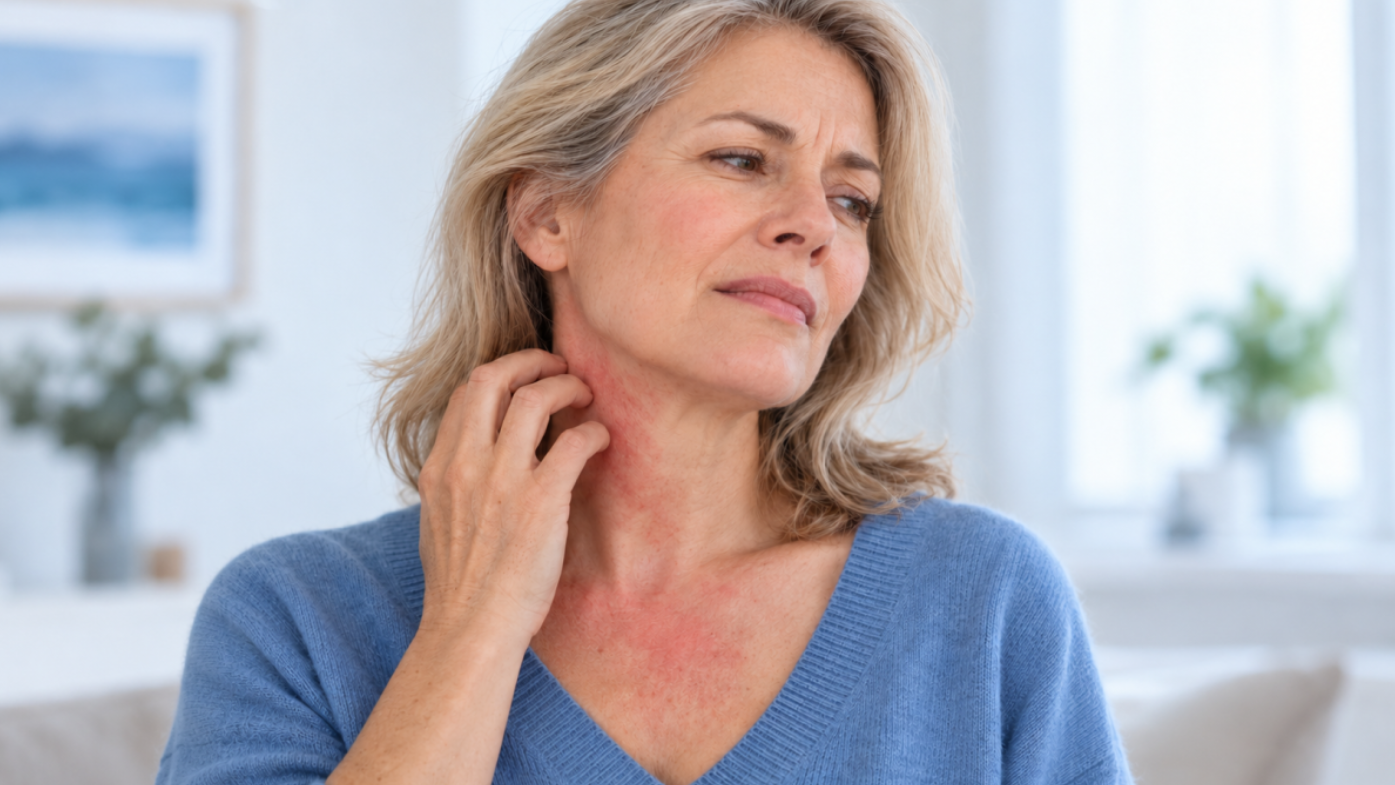
Skin redness, itching and hives are commonly associated with allergic reactions. However, allergies are not always the cause of these symptoms.
Histamine is a naturally occurring molecule involved in multiple physiological functions. When it is not broken down efficiently, it can contribute to symptoms affecting different organs and systems, including the skin. One factor that may contribute to this situation is Diamine Oxidase (DAO) deficiency, a condition associated with a reduced ability to metabolise dietary histamine.
What Happens When Skin Is Exposed to Cold?
In susceptible individuals, exposure to cold temperatures may trigger the release of histamine from skin mast cells. As a result, symptoms such as the following may appear:
- Skin redness
- Itching
- Hives (urticaria)
- Eczema
Although these symptoms may resemble an allergic reaction, the underlying mechanisms can be different.
Understanding the Cause Changes the Approach
Not all histamine-related symptoms share the same origin. Identifying the underlying mechanism is essential to achieving an accurate assessment and developing a personalised care strategy.
In selected patients, particularly when symptoms are associated with histamine accumulation, a low-histamine diet and DAO enzyme supplementation may be considered as part of the management approach under professional guidance.
What Does the Research Show?
Several clinical studies have reported improvements in skin symptoms following the implementation of a low-histamine diet. Research has also observed symptom improvement after DAO enzyme supplementation in patients with chronic spontaneous urticaria and low DAO enzyme activity.
A Personalised Approach
Skin symptoms can arise from different causes and mechanisms. For this reason, persistent redness, itching or hives should always be assessed on an individual basis.
Different mechanisms. Different needs. Personalised care.
References: Guida et al. (2000); Vickerstaff Joneja et al. (2001); Park et al. (2008); Worm et al. (2009); Siebenhaar et al. (2016); Wagner et al. (2017); Son et al. (2018); Rentzos et al. (2024).